



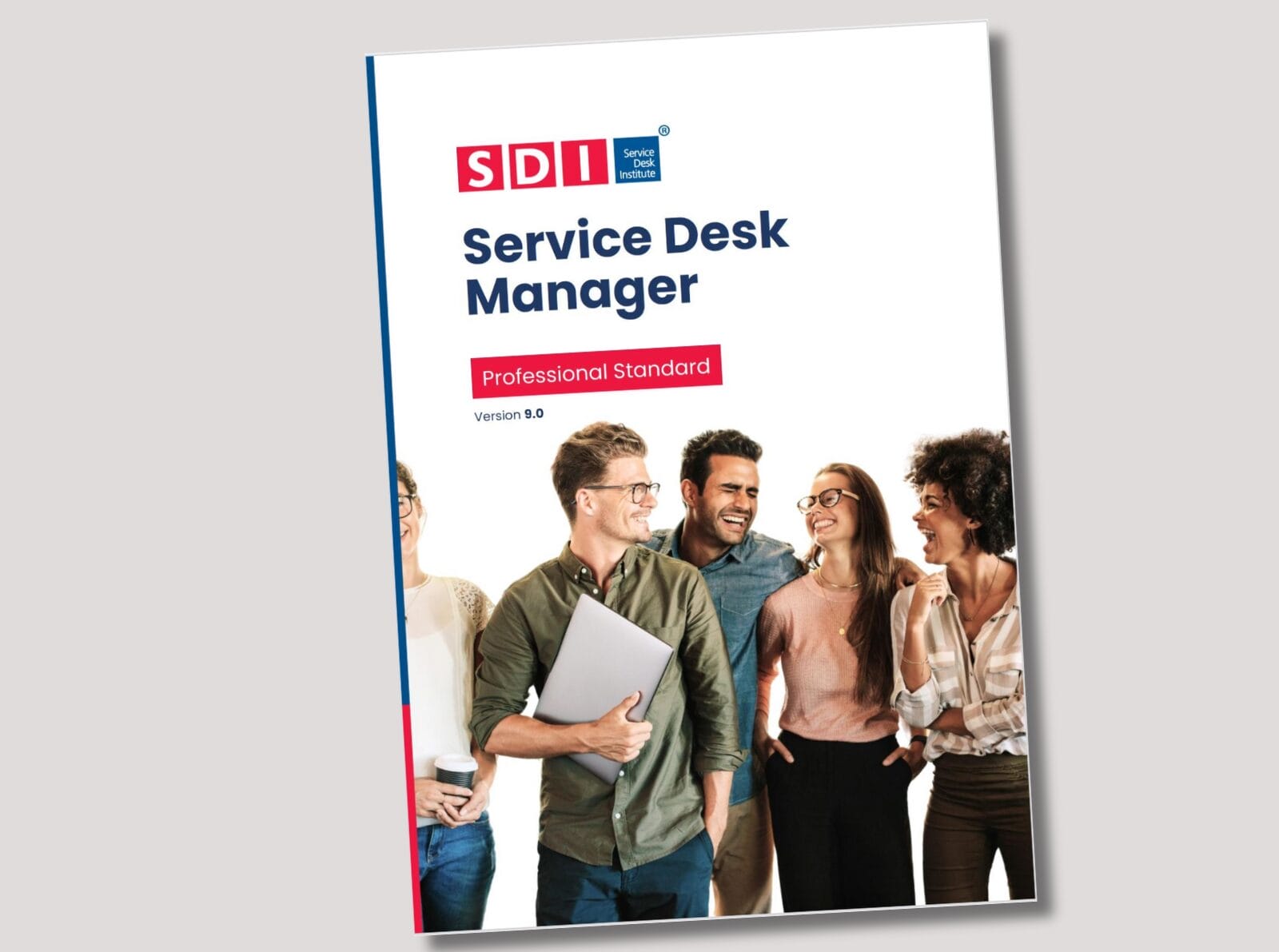
Service Desk Manager Professional Standard Update (v9) – What’s Changed?
The latest version of the Service Desk Manager Professional Standard (v9) is here. In this blog we’ll outline the key changes from v8 to v9 so that you can see at a glance where the major shifts and additions are, as well a link to download the new Standard.
Why update the Standard?
The Service Desk Manager (SDM) role is changing significantly. It is no longer focused solely on managing processes, tools, and performance, but on leading people, shaping experiences, and supporting the organisation in an increasingly digital and complex environment. The Professional Standard has been updated to reflect how the role is evolving and the broader set of skills today’s Service Desk Managers are expected to embrace.
Changes in the way people work, the rise of hybrid and remote working, increased reliance on digital services, and the growing use of automation and AI have all reshaped expectations of the service desk. Managers are now required to balance operational excellence with employee experience, customer experience, wellbeing, and ethical use of technology.
If v8 focused on best practice for managing a service desk, v9 focuses on leading a service team in a digital, hybrid, and AI-enabled world — helping Service Desk Managers remain relevant, effective, and confident in their role today and into the future.
Core shifts at a glance
The transition from v8 to v9 incorporates a fundamental mindset shift: the Service Desk Manager is no longer defined by operational excellence alone, but more by experience-led leadership. This shift reflects how modern Service Desks create value through people, outcomes, and digital experience, not just processes and performance. The core shifts at a glance:
v8 v9
———————————————————
Processes & SLAs → Experience, XLAs & Outcomes
Technology as a tool → Technology as an enabler
People as resources → People as value creators
Reactive improvement → Predictive & proactive
Support function → Strategic business partner
What does this mean for Service Desk Managers?
In the evolution from v8 to v9 existing concepts and skills within the SDM role are reframed and new ones introduced to reflect the realities of hybrid work, AI adoption, and experience-driven service management. The table below maps how the core domains of the Service Desk Manager role have shifted and expanded from v8 to v9.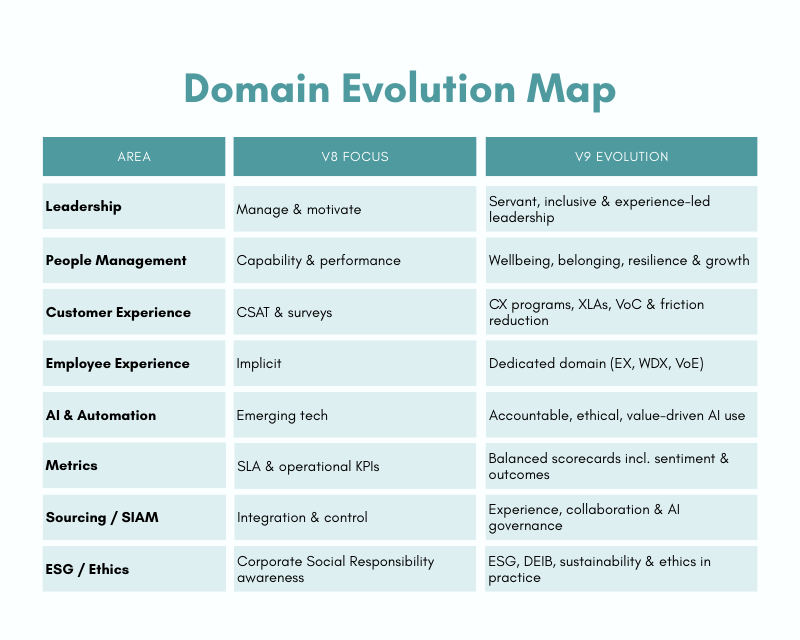
The big picture
The Service Desk Manager role has grown beyond keeping things running smoothly. While strong processes and reliable performance still matter, they are no longer enough on their own. Managers are now expected to understand how support services affect the day-to-day working lives of people across the organisation, and guide the way with new technologies, digital transformation and cyber security.
Every interaction shapes trust, confidence, and willingness to engage with IT. This means Service Desk Managers need to think not just about speed and consistency, but about clarity, empathy, and the overall impact of the service they provide.
The updated Standard reflects this wider responsibility. It recognises that effective Service Desk Managers must balance operational delivery with leadership, judgement, and care for both customers and their teams, helping organisations get real value from technology while supporting the people who rely on it.