

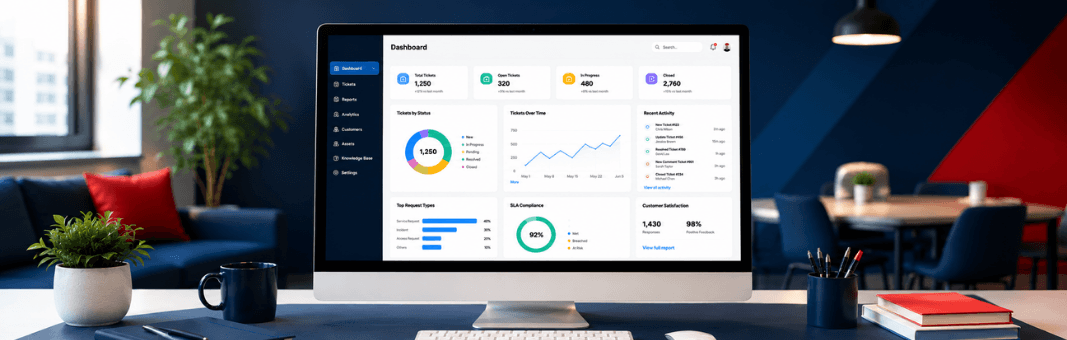

Finding the right ITSM software is becoming more and more complex. The market is rapidly changing, and vendors are getting more aggressive in touting their AI and automation features, as well as their employee experience and broader platform capabilities. What this means, you now have a longer list of features that does not necessarily mean it’s the better fit for you, and comparing tools the right way isn’t simply a matter of looking at a vendor matrix.
The most effective ITSM software comparison starts with a simple principle: focus on what your organisation actually needs to deliver, support and improve. SDI’s independent, vendor-agnostic approach to ITSM Tool Selection & Assurance Services reflects exactly that, helping organisations assess tools against people, processes, customer experience, governance and long-term value rather than technology alone.
How to Compare ITSM Software in 2026
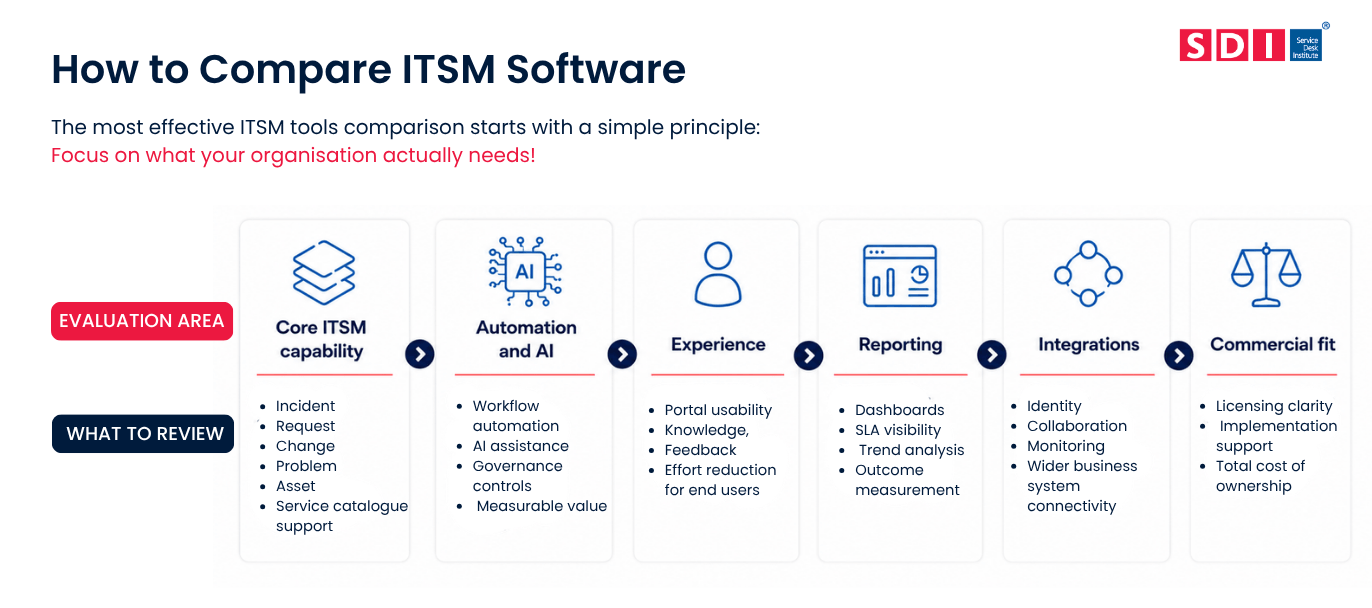
A useful comparison framework should combine traditional ITSM capability with the areas that matter most in modern service environments, including automation, reporting, integrations and user experience.
Using a framework like this helps buyers avoid being distracted by isolated features that look impressive in a demo but do little to improve service outcomes in practice. For a broader selection framework, SDI’s A Comprehensive Guide to ITSM Tool Selection is a useful next read.
Segment the Market Before Comparing Vendors
One of the biggest mistakes in ITSM software comparison is treating every tool as though it belongs in the same shortlist. In reality, different platforms are designed for different levels of service maturity, complexity and internal capability.
A more practical way to compare tools is to group them by market segment first:
- Enterprise platforms usually offer broad process coverage, high configurability and deep ecosystem reach, but they often require greater implementation effort and stronger long-term governance.
- Mid-market platforms tend to balance capability with quicker deployment and more manageable ownership models.
- SMB-focused tools often prioritise usability, speed of setup and lower administrative overhead for smaller IT teams.
This segmented approach makes comparison more realistic because it reduces the risk of evaluating tools that were never a sensible fit for the same environment in the first place.
What to Compare Beyond Features
Feature comparison is useful, but it should never be the only lens. Some of the most important differences between ITSM tools only become obvious when you look at how easy they are to implement, manage and improve over time.
When shortlisting ITSM software, buyers should also compare:
✅ Ease of implementation and expected time to value.
✅ Quality of onboarding, vendor support and customer success.
✅ Admin usability for teams without dedicated platform specialists.
✅ Reporting quality for both operational teams and leadership stakeholders.
✅ Scalability without unnecessary complexity.
✅ Support for self-service, knowledge and better service experiences.
This broader view matters because the right tool is not just the one with the most capability. It is the one your organisation can implement successfully, govern properly and continue to improve as your needs change. Teams that want a more structured, independent route can also explore SDI’s ITSM Tool Selection & Assurance Services for support with shortlisting, evaluation and optimisation.
A More Practical Approach to Evaluation
The best ITSM software comparison processes are structured, evidence-based and grounded in real service needs. That means they go beyond product marketing and focus on how tools perform against genuine workflows, user expectations and operational priorities.
A strong evaluation process should include:
✅ Clear business drivers and service objectives.
✅ A realistic picture of current maturity and readiness.
✅ Experience-led requirements, not just technical wish lists.
✅ Structured vendor scoring.
✅ Practical demo scenarios based on real workflows.
✅ Consideration of governance and long-term ownership.
This approach reduces bias, improves confidence and helps teams avoid expensive mistakes that come from buying around trends rather than operational fit. One of the best ways to bring this to life is to see platforms in action, which is why SDI’s upcoming ITSM Tools Days and on demand Automation ITSM Tools Demos are such useful next steps for buyers who want to compare tools beyond a brochure or landing page.
Continue Your Research
If you are comparing ITSM software and want a more structured evaluation process, these SDI resources are useful next steps:
️➡️ Read A Comprehensive Guide to ITSM Tool Selection
➡️ Watch the Automation ITSM Tools Demo Day
➡️ Learn about ITSM Tool Selection & Assurance Services