



 Back to Resources
By John Noctor, SDI Chief Customer Success Officer
More from Leadership Lessons ➡️ Read: The Button Next to the Door
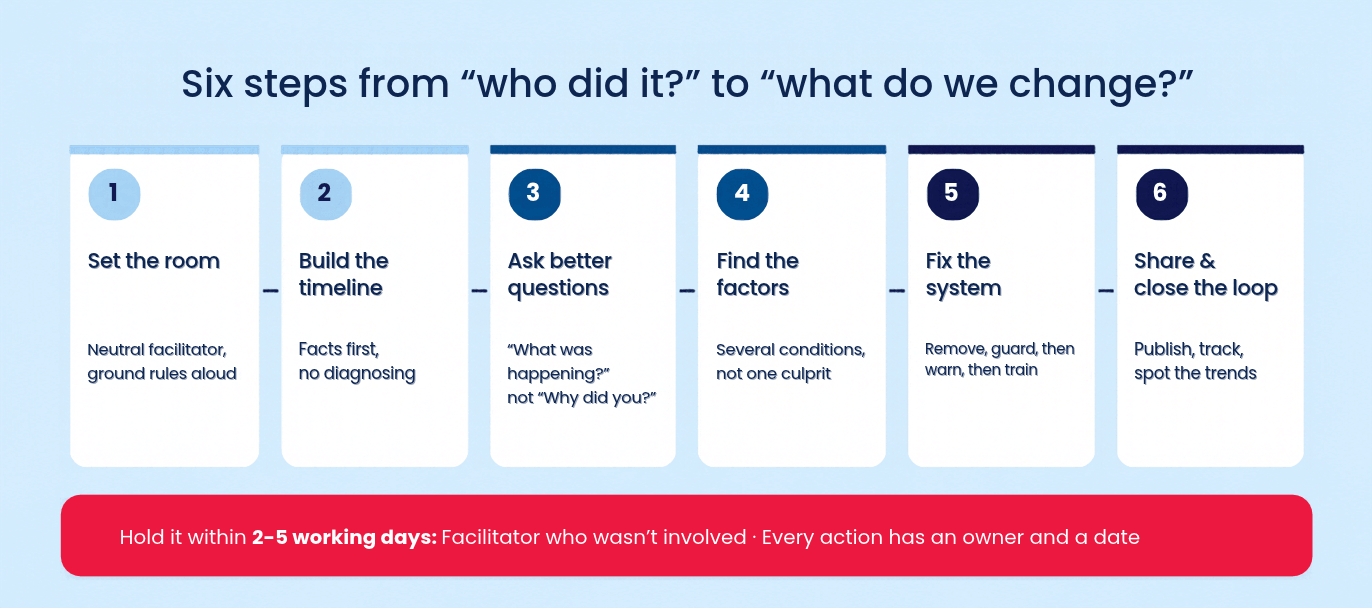
Here’s how you can run one.
First, what “blameless” actually means
Blameless doesn’t mean there’s no accountability. It doesn’t involve ignoring mistakes or giving everyone a gold star just for showing up. It means starting with one assumption: the people involved did what made sense to them at the time, given the information, tools, and pressures they faced.
If it made sense to them at the time, it will make sense to the next person too. That’s what you need to fix.
The idea isn’t new. Safety researcher Sidney Dekker has spent decades arguing that “human error” is where an investigation should start, not where it ends. John Allspaw brought the same thinking to tech operations at Etsy, and Google’s Site Reliability Engineering teams built it into how they run postmortems.
When to run one
You don’t need a full review for every password reset. Run one when:
🔹 Any Priority 1 or major incident.
🔹 A near miss that could have been a Priority 1.
🔹 The same incident type keeps coming back.
🔹 Anything that surprised you, even if the impact was small.
Step 1: Set the room up properly
Start by reading the ground rules out loud every time:
Step 2: Build the timeline before anyone explains anything
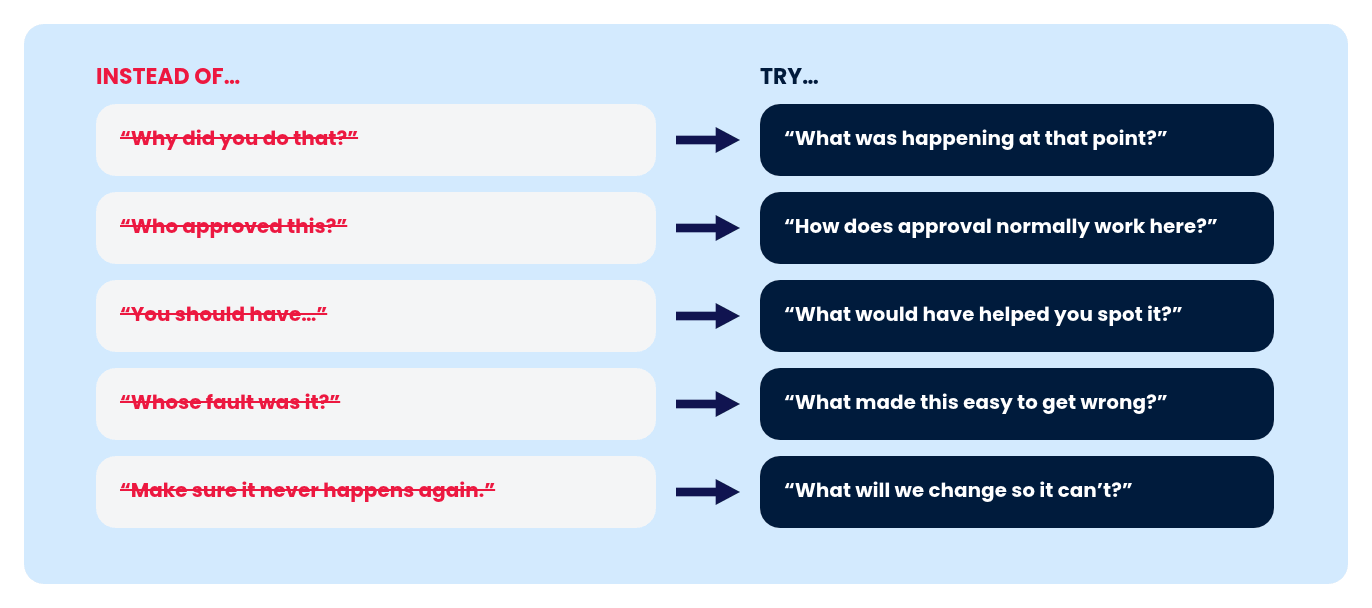
Step 3: Ask better questions
Step 4: Look for contributing factors, not one root cause
Instead, ask what contributed across a few areas:
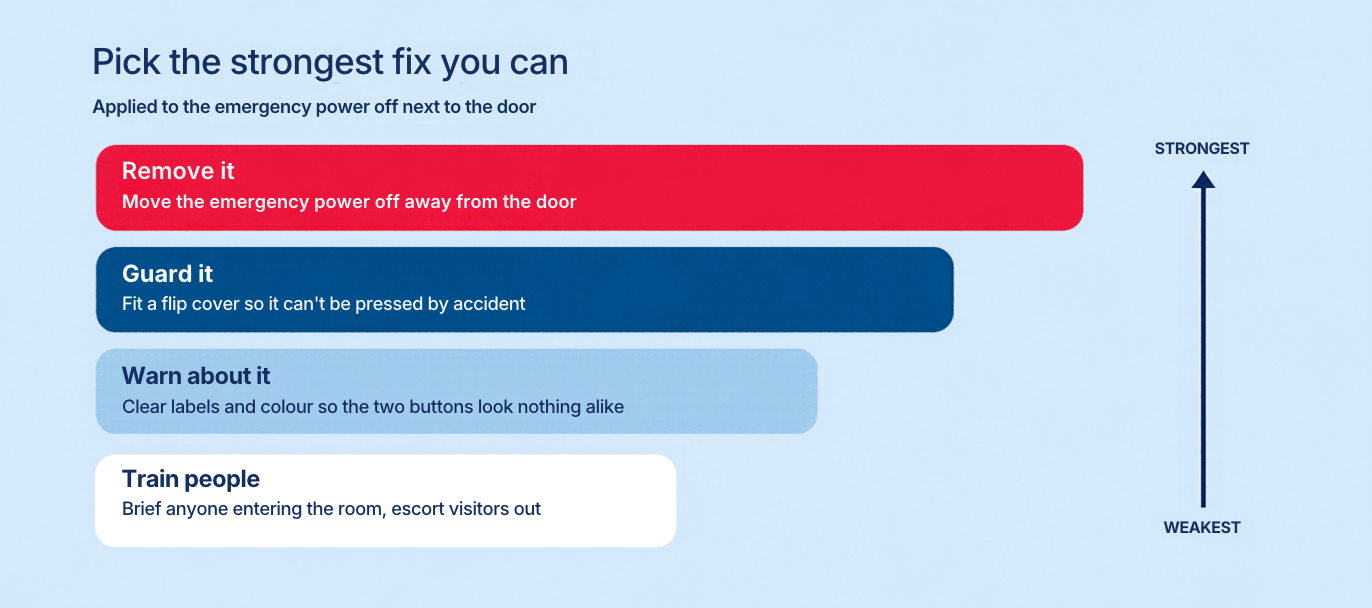
Step 5: Agree actions that change the system
Step 6: Share it and close the loop
Signs your review isn’t really blameless
🔹 The write-up names a person as the root cause.
🔹 The most senior person did most of the talking.
🔹 People are noticeably quieter than in normal meetings.
🔹 The actions are mostly retraining and reminders.
🔹 Someone was disciplined afterwards for what they said in the room.
🔹 The same incident turns up again within six months.
The real test
Fix the room, and you fix it for everyone who walks through the door next.
Free template
Blameless post-incident review
Use this as the agenda and the write-up. Keep it to two pages.
| Section | What to capture | Your notes |
|---|---|---|
| 01Incident | Reference, date, priority, services affected | |
| 02Impact | Who was affected, for how long, and how badly | |
| 03Timeline | Key events in order, with times. Mark each decision point. | |
| 04What made sense at the time | For each decision point: what did people know, and what were they trying to achieve? | |
| 05Contributing factors | Process · Design · Information · Pressure · Knowledge | |
| 06What went well | What limited the damage or sped up recovery? | |
| 07Actions | Each one: the change, owner, due date, problem record. Remove, guard, warn or train? | |
| 08Shared with | Who has seen the write-up, and when | |
| 09Follow-up date | When you’ll check the actions are done and working |
We are here to understand, not to blame. Nobody will be disciplined for anything said honestly in this room. No “should have”.