


 Back to Resources
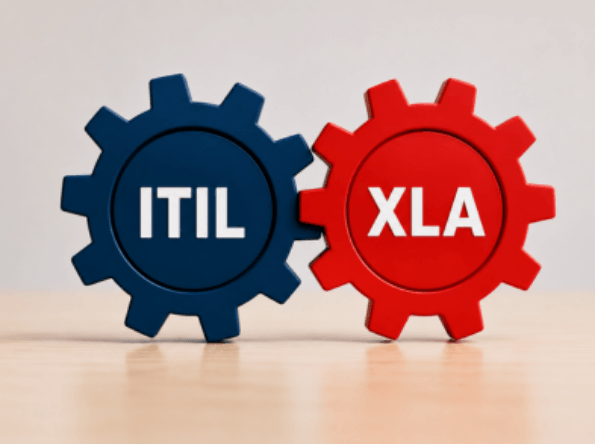
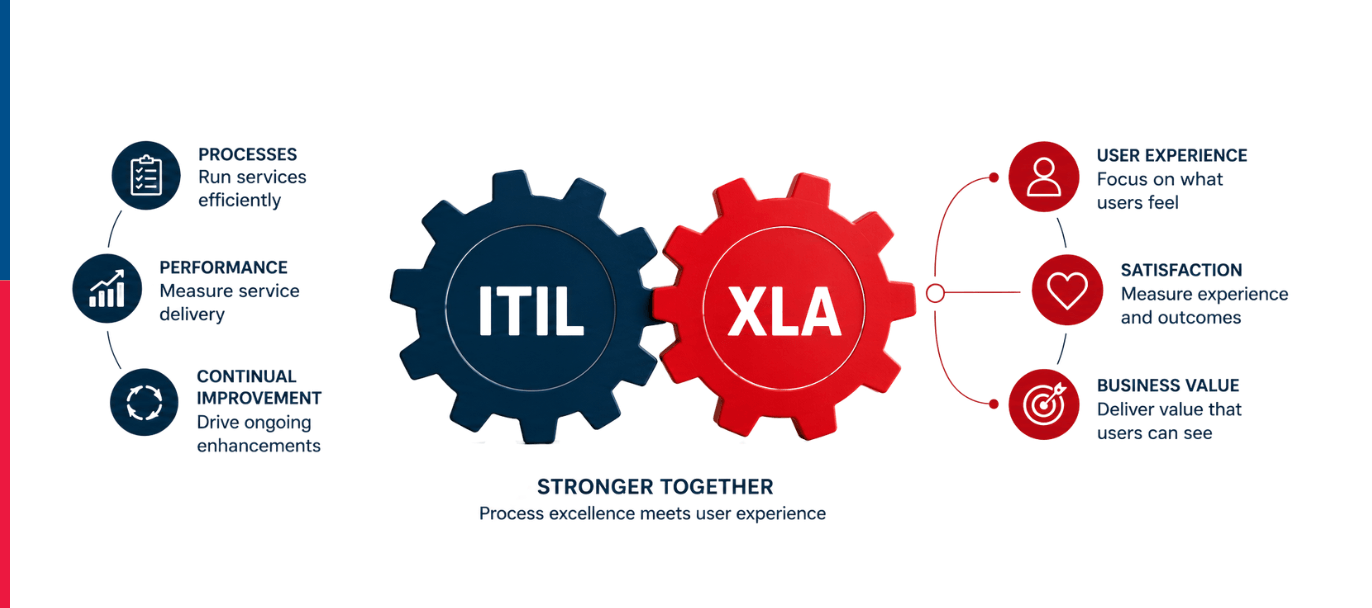
Both the XLAs and ITIL are focused on achieving value and continuously improving services, and therefore are compatible with each other. ITIL-aware service management is already in place, and can be complemented by the user-experience layer of the XLA.
This matters for service desks because it allows them to tie technical aspects of support to the real-world experience of the users of that support. That puts a twist on service improvement, making it more relevant, more measurable, and more credible to the business.
Where XLAs fit in ITIL
XLAs are not intended to replace any ITIL processes. Rather, they introduce a measurement layer to gauge if services are actually serving users.
This means that XLAs can be co-located with incident management, request fulfilment, problem management, knowledge management, and continual improvement. They help answer the question: “Are we adding value in a way that users can feel?”
Understanding how the alignment works
ITIL is based on value, outcomes, governance, and continual improvement. All of those objectives are achieved at XLAs through measuring experience and associating it with service performance.
This is beneficial as it enables improvement teams to shift attention from process compliance to impact on the service. A process can be correct but still be frustrating, cause delays, or add additional effort. The problems with XMAs are made visible.
Using XLAs in service reviews
A good approach to tie XLAs to service improvement programmes is to involve them in service reviews. This includes taking into account experience data along with SLA reporting, incident trends, and improvement plans.
For instance, if the process is efficient with low satisfaction, then it implies that a recurring issue has good resolution time but not good satisfaction. User expectations, communication, knowledge or handoffs can then be the focus of the review.
Link XLAs to continual improvement
Continual improvement of ITIL is best practised when it is evidence-based. Evidence for XLAs comes in the form of either areas where user experience is problematic or where the service is adding value.
This may facilitate prioritising improvement work. Instead of attempting to solve all the problems at the same time, teams can concentrate on the trips or interactions most meaningful to users and the business.
How to remain practical
Any service framework has this problem: it gets too abstract. To prevent that, keep the XLA as simple as possible, and stick to the existing service routines.
Follow the same review cycles if possible. Don’t let the scorecard get too long. Ensure that each measure has an owner and that owners know what to do. This helps keep the XLA within regular service management instead of making it an isolated exercise.
Because they measure what the user experiences, not what teams deliver, XLAs can easily be incorporated into service improvement programmes, following ITIL. This establishes a closer relationship between support activity, business value and continual improvement for service desks.
📕 Continue reading about XLAs:
➡️ SLA Vs XLA In IT Support
➡️ Experience Level Agreements – What They Are And What They Are Not!
➡️ How To Write An XLA From Scratch
➡️ How To Measure XLAs In IT Support
➡️ How to Build an XLA Framework for Service Desk Teams
➡️ Common XLA Mistakes And How To Avoid Them