




What Is an IT XLA?

What is an IT XLA?
An IT XLA, or Experience Level Agreement, is a practical framework that defines what good IT support should feel like for the people using it. Unlike a document that only tracks speed and uptime, an XLA sets service expectations, clarifies responsibilities, and measures whether support is actually helping users work effectively.
For service desks, XLAs add the human view to service management. They help teams move beyond “we hit the target” and focus on whether employees were satisfied, productive, and supported at the moments that mattered.
Speak to our teamIT XLA at a glance
1️⃣ What does an XLA cover?
An XLA covers the experience of IT support, including expectations, service outcomes, user sentiment, communication quality, and the measurable results that matter to the business.
2️⃣ Who is it for?
It is useful for service desk leaders, ITSM teams, support managers, outsourced providers, and organisations that want to measure service quality from the user’s point of view, not just from an operations dashboard.
3️⃣ Why does it matter to service desks?
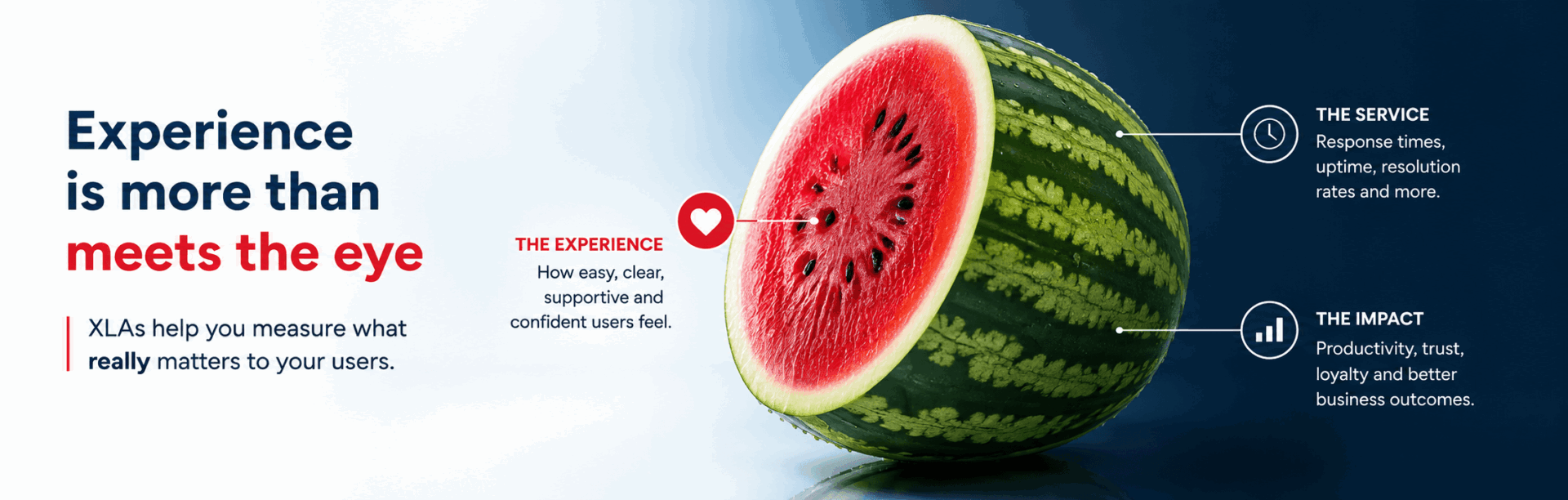
A service desk can meet every SLA target and still leave users frustrated, which is often described as the “watermelon effect”: green on the outside, red on the inside. XLAs help teams spot that gap by measuring experience, productivity, and business impact alongside standard service metrics.
Core components of an XLA
An effective XLA should be clear enough for stakeholders to understand and practical enough for support teams to use day to day. Most strong XLA frameworks include the following elements.
🔷Service scope: which services, journeys, teams, and user groups the agreement applies to.
🔷Experience expectations: what “good support” looks like from the end-user perspective, such as clarity, reassurance, speed, ownership, or ease.
🔷Responsibilities: who owns delivery, communication, feedback collection, reporting, and improvement actions.
🔷Measures and targets: a mix of operational metrics, sentiment indicators, and outcome-based targets.
🔷Feedback methods: pulse surveys, journey feedback, ticket-level sentiment, interviews, and experience reviews.
🔷Review cadence: how often the XLA is assessed, reported on, and improved.

How to write an XLA from scratch
Creating an XLA starts with defining the service journeys that matter most, then documenting what users need from those moments, how support teams will deliver it, and how success will be measured. The aim is not to replace service metrics, but to connect them to real outcomes and user experience.
Read More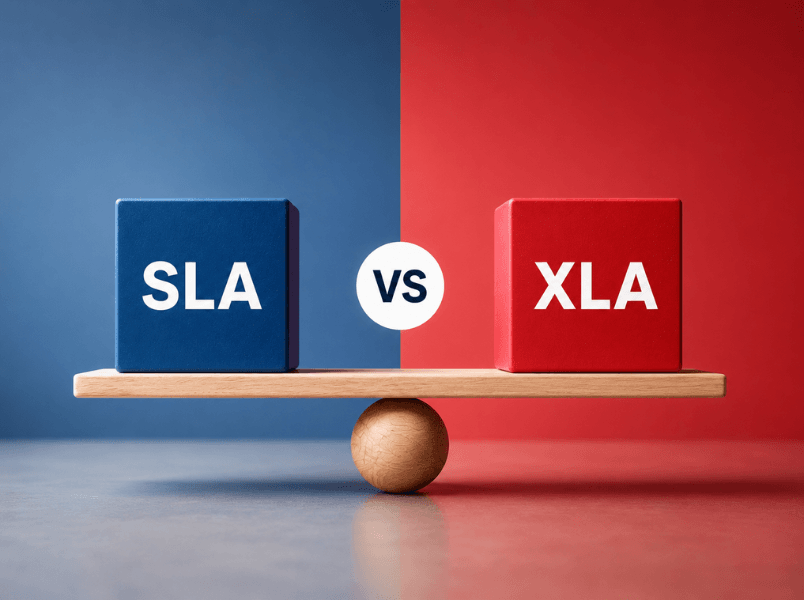
SLA vs XLA: What is the difference?
An SLA measures whether agreed service levels were met, such as response time, resolution time, or availability. An XLA measures how users experienced that service and whether it helped them stay productive and achieve the intended outcome.
In practice, service desks need both. SLAs show operational performance, while XLAs reveal whether that performance created value for the people using the service.
Read MoreWatch on Demand: Follow the XLA Journey



How to measure XLAs in IT support
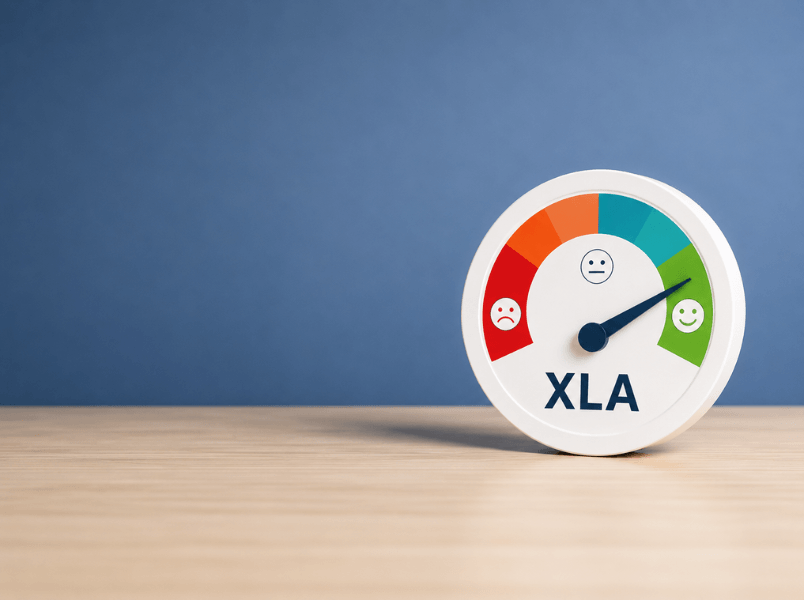
XLA measurement usually combines three things: service metrics, user sentiment, and business outcomes. That means you might track resolution speed alongside post-ticket feedback, effort scores, first-day productivity, or the impact of IT support on key employee journeys.
This gives service desk leaders a fuller picture than SLA reporting alone, especially when technical targets look healthy but experience scores say otherwise.
Read More
How to build an XLA framework for a service desk team
A service desk XLA framework should map the moments that matter, assign ownership, define reporting, and create a process for regular review and improvement. It works best when support, service management, suppliers, and business stakeholders agree on what success looks like together.
Read MoreCommon XLA mistakes and how to avoid them
Common mistakes include treating XLAs as a rebrand of SLAs, collecting feedback without acting on it, tracking too many metrics, and failing to link experience data to service improvement. These issues can make an XLA feel vague or hard to manage.
Read MoreAligning XLAs with ITIL and continual improvement
XLAs fit naturally with modern service management because they focus on outcomes, value, and continuous improvement rather than isolated technical outputs. That makes them useful within ITIL-aligned environments that want stronger service reviews, better stakeholder reporting, and more meaningful improvement plans.
Read More